What are the VOR / DME Service Volumes

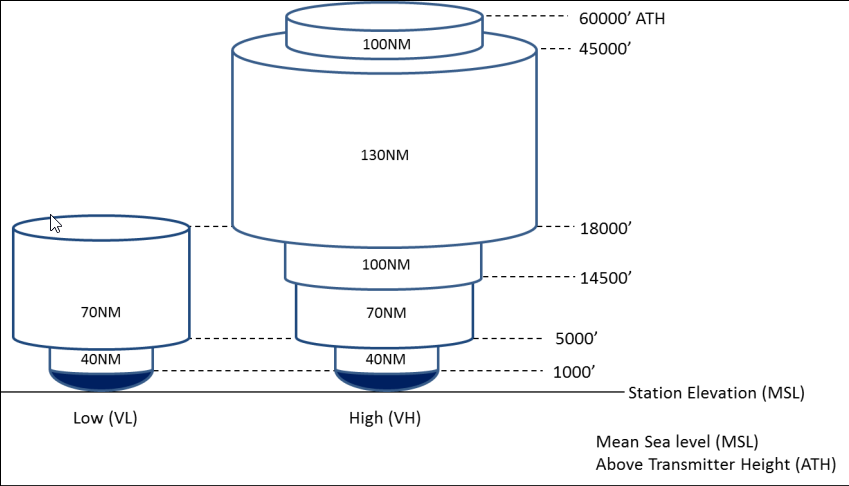
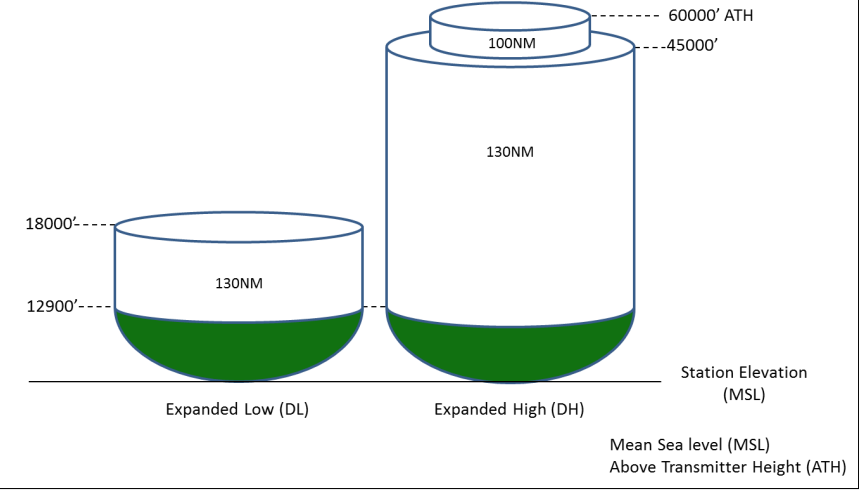
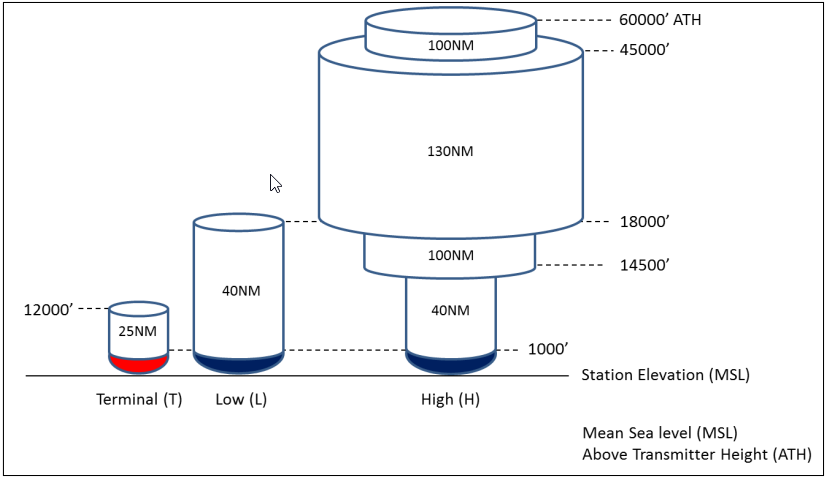
Standard Service Volumes is the three dimensional area in which it guarantees Navigation Aid (NavAid) signal strength, course protection, and interference protection.
It is important for pilots to know the service volumes of VOR and DME navaids because of interference. Knowing the potential of interference allows a pilot to not disoriented when trying to course through their flight.
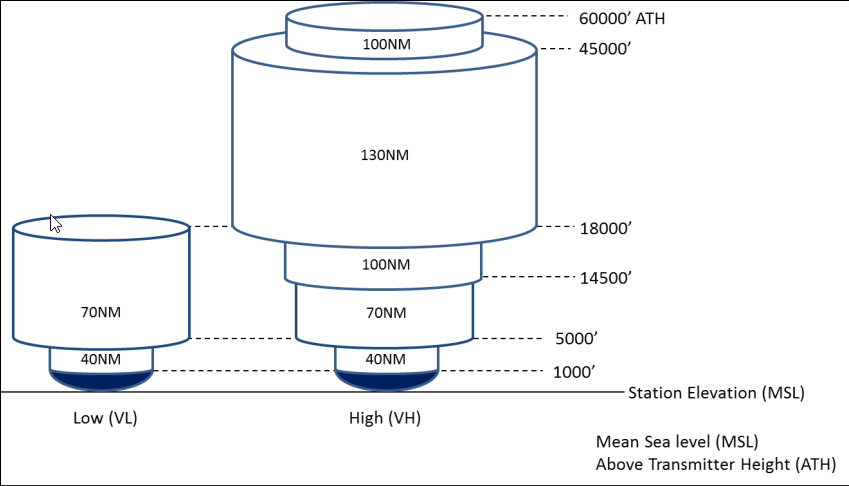
Below is a table with the old VOR and DME, and the new and improved VOR / DME service volumes. Although the old SSVs are being phased out, you can still see it commonly used.
| SSV Class | Altitudes | Distance Coverage (NM) |
| (T) Terminal | 1000’ to 12,000’ | 25 |
| (L) Low Altitude | 1000’ to 18,000’ | 40 |
| (H) High Altitude | 1000’ to 14,500’ 14,500’ to 18,000’ 18,000’ to 45,000’ 45,000’ to 60,000’ | 40 100 130 100 |
| (VL) VOR Low | 1000’ to 5,000’ 5,000’ to 18,000’ | 40 70 |
| (VH) VOR High | 1000’ to 5,000’ 5,000’ to 14,500’ 14,500’ to 18,000’ 18,000’ to 45,000’ 45,000’ to 60,000’ | 40 70 100 130 100 |
| (DL) DME Low & (DH) DME High* | 1000’ to 12,900’ | 40 increasing to 130 |
| (DL) DME Low | 12,900’ to 18,000’ | 130 |
| (DH) DME High | 12,900’ to 45,000’ 45,000’ to 60,000’ | 130 100 |
Legacy VOR Standard Service Volumes
New VOR Standard Service Volume
New DME Service Volumes