
A v i a t i o n S i x t y 


Read All Topics

Rickie C.

What is Operational Control in Part 121?

Operational control defined in §1.1: With respect to a flight, the exercise of authority to initiate, conduct, and terminate a flight. The definition of operation control is important because it is the chain of responsibility on every step of flight in regard to your operation.

Continue reading...


Rickie C.

Types Of Precipitation

Precipitation is when water vapour that is condensed into clouds falls onto the surface. As precipitation falls down the layers of the atmosphere, there could be different temperatures as it falls. Therefore, create different types of precipitation. Vapour that does not reach the surface is…

Continue reading...
Rickie C.

What Are The Types Of Icing?

For pure water to freeze in the atmosphere, it must reach a temperature of -40 degrees Celsius. However, water in clouds where water vapour is below freezing to -40 degrees may have a mix of icing and supercooled water. Supercooled water upon contacted with a…

Continue reading...
thundestorm
Rickie C.

What Are The Stages Of A Thunderstorm?

A thunderstorm is the convective cell of a cumulonimbus cloud having lightning and thunder. It has three defined stages during it life cycle and typically lasts 30 minutes. Thunderstorms needs three ingredients: sufficient water vapour, unstable air, and a lifting agent. Thunderstorm Life Cycle Towering…

Continue reading...
picture of a FB CHART
Rickie C.

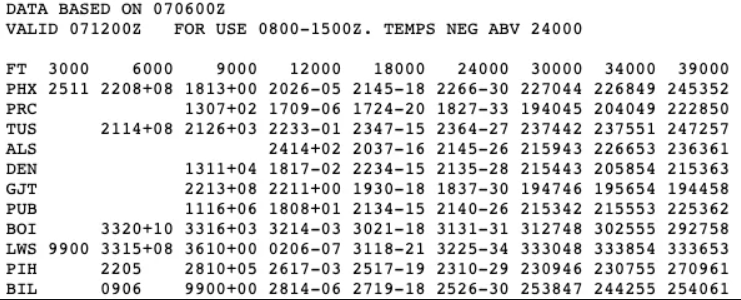
How to Read Wind / Temp Aloft Charts

A Wind and Temperature Aloft (FB) Chart shows the forecast wind and temperature at multiple altitude and multiple locations. Pilots and dispatchers can use the FB chart for flight planning, locating potential icing levels and jet streams. These forecasts are generated 4x daily (00Z, 06Z,…

Continue reading...
Rickie C.

Structural Weights - MZFW, MRW, MTW, MLW

Structural weights are weight limits designated by the AFM (Aircraft Flight Manual) that limits the maximum weight of an aircraft at certain phases of flight. Going over the maximum structural weights at any point can potentially cause fatal or air frame damage. It is important…

Continue reading...
Rickie C.

What is the Standard Takeoff Minimums?

The standard takeoff minimums for Part 121 and Part 135 are regulations that limit the visibility value for pilots to takeoff. For takeoff, visibility is the controlling factor, we do not look at ceiling. These are standard takeoff minimums, different companies may have exception CO78…

Continue reading...
Rickie C.

When Do You Need A Takeoff Alternate?

A takeoff alternate is an airport a dispatcher list if the current weather at the departure airport is below the lowest landing minimums for IFR flights. Imagine an aircraft taking off on a foggy day where visibility and ceiling are low. During takeoff, one of…

Continue reading...