
James Hart Letter and Why We Only Look at Visibility - 121 Operations


Ever wondered why we only look at visibility for IFR flight plan when determining the the destination airport is at or above landing minimums for Part 121?
In Part 121, § 121.613 states that you can not release an IFR flight plan unless the weather conditions at the destination airport at ETA is at or above authorized minimums.
§ 121.613 Dispatch or flight release under IFR or over the top.
Except as provided in § 121.615, no person may dispatch or release an aircraft for operations under IFR or over-the-top, unless appropriate weather reports or forecasts, or any combination thereof, indicate that the weather conditions will be at or above the authorized minimums at the estimated time of arrival at the airport or airports to which dispatched or released.
The keywords, authorized minimum, does not actually state what minimum we are talking about. Are we looking at the visibility or the ceiling or both?
Therefore, in 2008, James B. Heart sent a letter to the FAA asking for legal clarification on what "authorized minimum" actually meant.
On April 9th, 2009, Rebecca B. MacPherson, Assistant Chief Counsel for Regulations, replied back with:
In 1967, the FAA recognized the need to "accommodate situations in which ceiling [values] alone are controlling, or ceiling and visibility [values] are controlling, depending on the procedure being used or the terms of the applicable operations specification." 32 Fed. Reg.13909, 13910(Oct. 16, 1967). The FAA revised the regulation, substituting the term "weather conditions" for "ceilings and visibilities" to allow for either, or both values, to be considered depending on the circumstances of the operation. Currently, under the U.S. Standard for Terminal Instrument Procedures (TERPS), most instrument approach procedures published within the United States do not contain a minimum ceiling value and therefore, visibility is generally the controlling authorized minimum for approach and landing.
Link to read the full James Hart Letter.
From the letter, Rebecca B. MacPherson clearly states that visibility is the controlling factor in authorized minimums. It is important to double check with your OpSpecs (Operation Specifications) if your company intercepts the regulation the same way.
However, further down the letter, MacPherson states that are four conditions where ceiling AND visibility become the controlling factors.
( 1) When the airport to which the aircraft has been dispatched or released has no instrument approach available.

(2) When a circle-to-land approach must be conducted at the airport to which the aircraft has been dispatched or released and minimum ceiling requirements are specified in the certificate holder's OpSpecs.

(3) When the instrument approach procedure for the airport specifies a minimum
controlling ceiling value.

( 4) When minimum ceiling requirements are otherwise specified in a certificate holder's OpSpecs
You should also read:
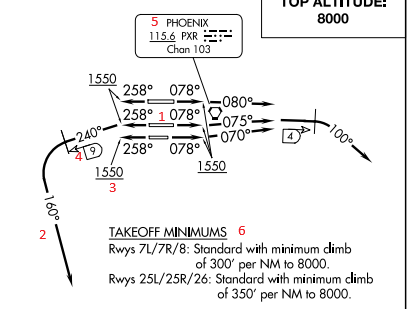
How to Read a SID Chart
A SID (Standard Instrument Departure) is a departure procedure used by the pilot and controller to provide obstacle clearance and provide an uniform departure transition from terminal to the departure control. A SID will include climb, heading, and transitions to a fix in order to…
Continue reading...
Minimum Fuel Requirements for Part 91, 121, 135 Operations
Minimum Fuel Requirements is the regulatory amount of fuel that an aircraft must carry in order to operate any sort of flight. The amount of fuel changes, depending on the aircraft's engine, time, IFR/VFR, and operation. Aviation regulations is generally separated into three categories: §121.645…
Continue reading...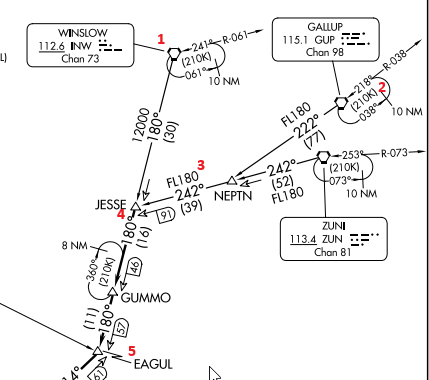
How to Read A STAR Chart
A Star (Standard Terminal Arrival Procedure) is a published instrument approach procedure that are used by pilots and ATC to transition from the en route phase to the approach phase of flight. It streamlines traffic into the airport, like "gates" into a baseball stadium. There…
Continue reading...