How to Read A Wind Barb

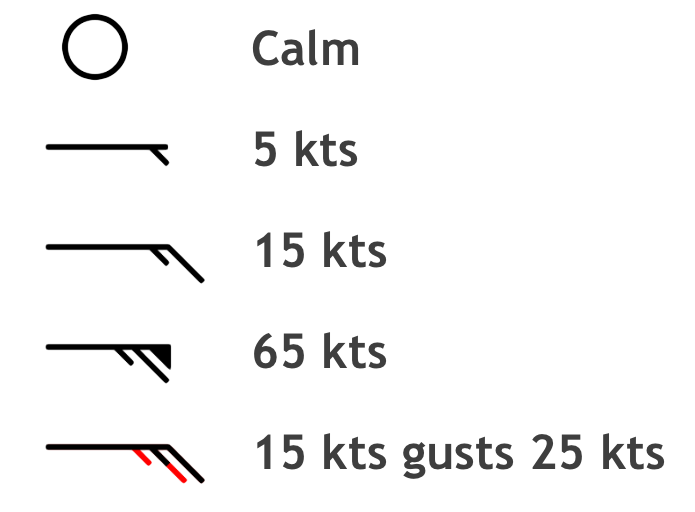
A wind barb is a symbol commonly used in wind graphs, GFAs, and station models. Being able to quickly read a wind barb allows a pilot or dispatcher to quickly gain situational awareness around a windy area.
According to the FAA a wind barb is:
A combination of long/short barbs and pennants indicate the speed of the wind in station weather plots rounded to the nearest 5 knots. Calm wind is indicated by a large circle drawn around the skycover symbol.
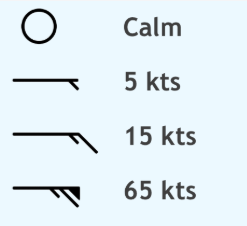
Based on the picture above, first we find the wind direction by simply seeing where the line is pointing at. All of the barbs are pointing to the right, therefore the wind direction is 90 degrees.
A half line on the pole indicates 5 knots, while a full line indicates 10. A triangle on the pole to create a "flag" would add 50 knots.
In order to find the speed, you will just add all of them up, similar to how you would count Roman numerals.
In some charts such as the GFA surface charts, you may see some red lines on the pole such as this:

Anytime a red line is shown on a wind barb, it is indicating some sort of gust. In order to calculate the gust, you would just add the black lines (which is your regular wind speed) with the red lines.
So we have a 1 full line (10) + 1 half line (5) + half red line (5) + half red line (5) = 25 gust knots.
You should also read:
How to Read a METAR
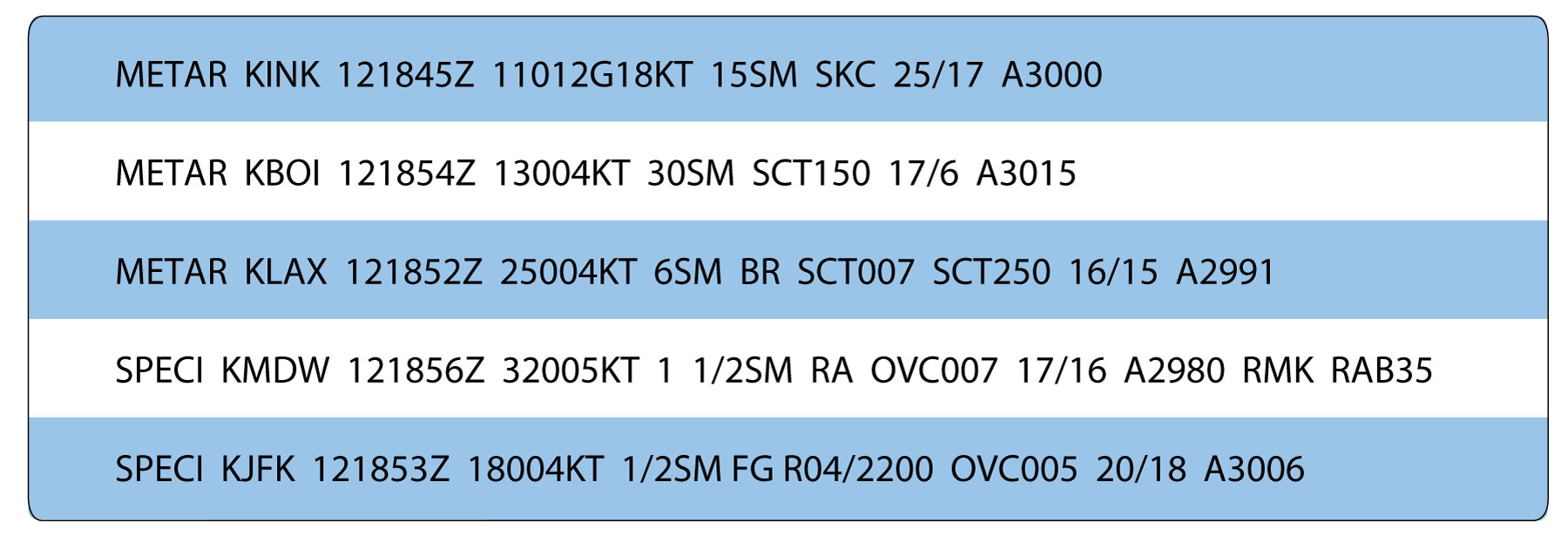
METAR (METeorological Aerodrome Report) are issued every hour at each reporting locations that reports the current weather valid for 1 hour. METARs are used by pilots, dispatchers, and ATC to obtain current weather information at the location. Check out your local's airport METAR by entering…
Continue reading...
How to Read a TAF
A TAF (Terminal Aerodrome Forecast) is a report that is submitted every 6 hours that is valid for 24-30 hours that forecasts the weather for the destination location. It is used by pilots and dispatchers to obtain forecast weather in order to determine if the…
Continue reading...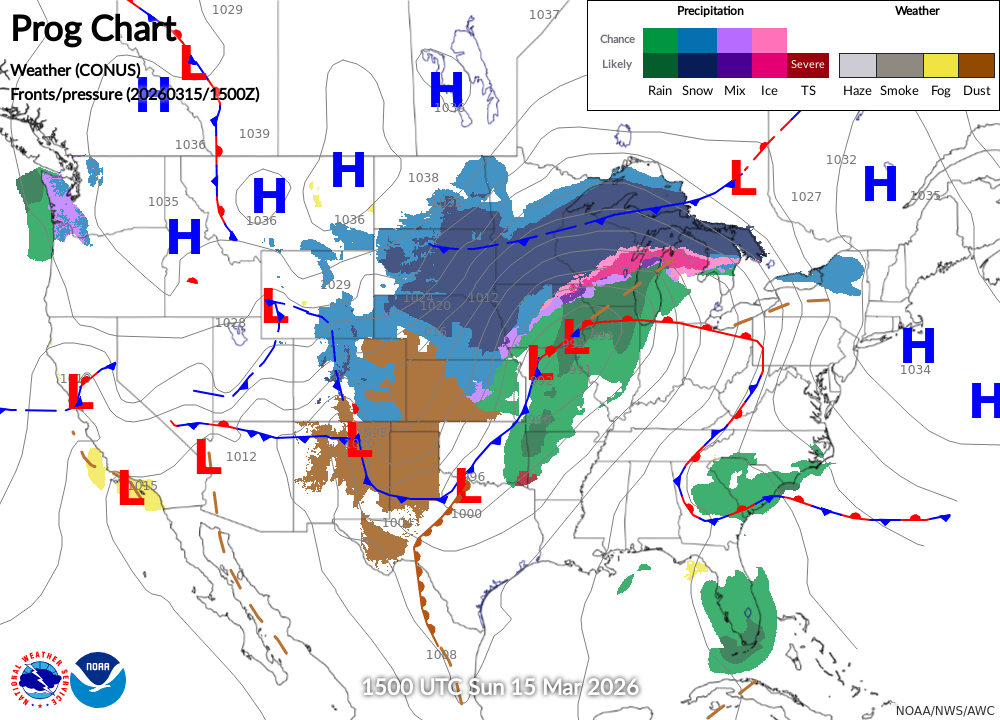
How to Read A Prog Chart
A prog chart (Surface Analysis Prog Charts) is a forecast chart created by the Weather Prediction Center that provides surface pressure systems, fronts, and precipitation for a multiday period. Each prog chart will forecast a "snapshot" of the weather at the given issued time. The…
Continue reading...