How Is Lift Generated By An Aircraft

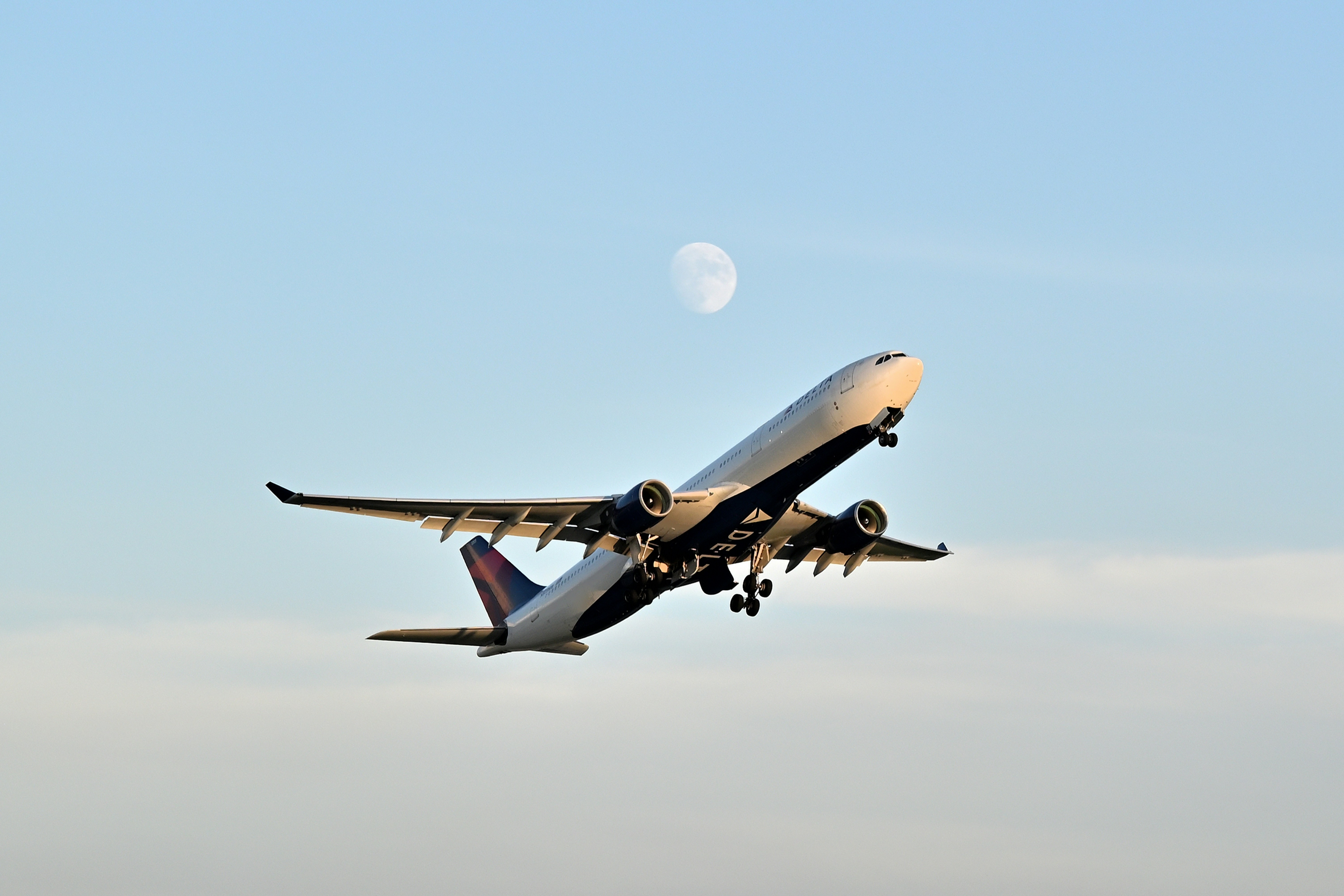
We all heard of that the primary drivers of lift in an aircraft is the Bernoulli's Principle. However, there are countless numbers of other factors that also contribute to lift. I watched this video by "Math and Science" that explains two additional factors that contributes to lift.
The three main principles, explained in the video, that generates lift are: Newton's Third Law Of Motion, Bernoulli's Principle, and the Coandă effect.
Newton's Third Law Of Motion
Newton's Third Law of Motion states that for every action (force) in nature, there is an equal and opposite reaction.
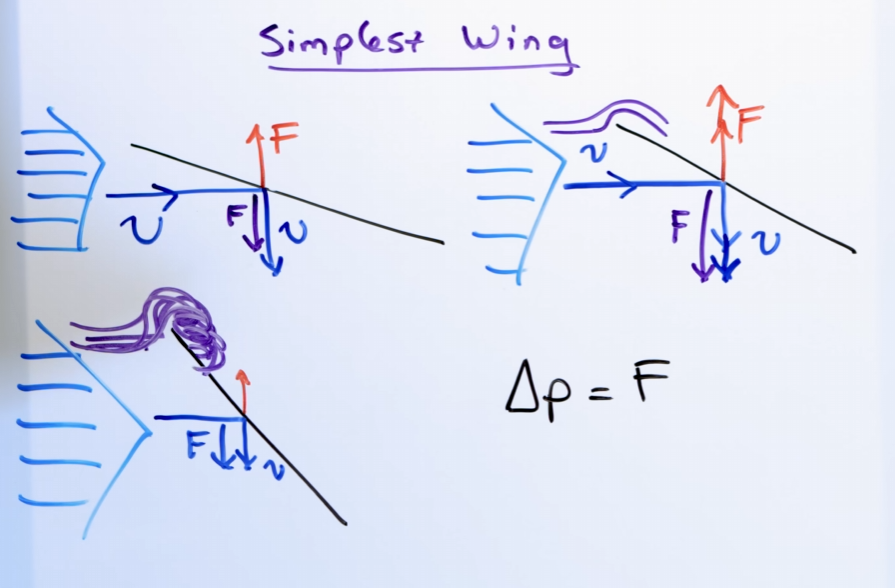
Relative wind will hit the underside of the wing, which will "bounce" the air downwards. The force downward generates a force down, and with Newton's Third Law of Motion, for every force, there must be an equal and opposite force.
Bernoulli's Principle
Bernoulli's principle states that as the speed of a moving fluid (liquid or gas) increases, its pressure decreases, and vice-versa
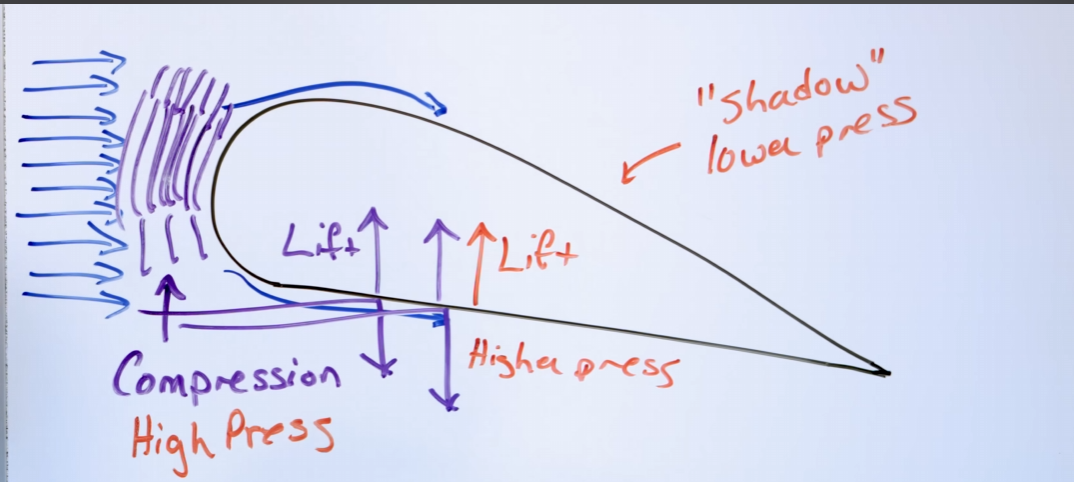
Relative wind hitting the front (big high pressure) and with the angle of attack (AOA) of the wing, it creates a shadow zone on the curve side. This shadow zone will speed up the air fluids which creates an area of "lower pressure" due to Bernoulli's principle.
As we learned in weather theory, high pressure wants to flow to low pressure. So the top is lower pressure and the bottom is higher pressure creates a differential in pressure which generates lift.
The Coandă Effect
The Coandă effect is the tendency of a fluid jet (liquid or gas) to stay attached to a nearby convex surface rather than following a straight path
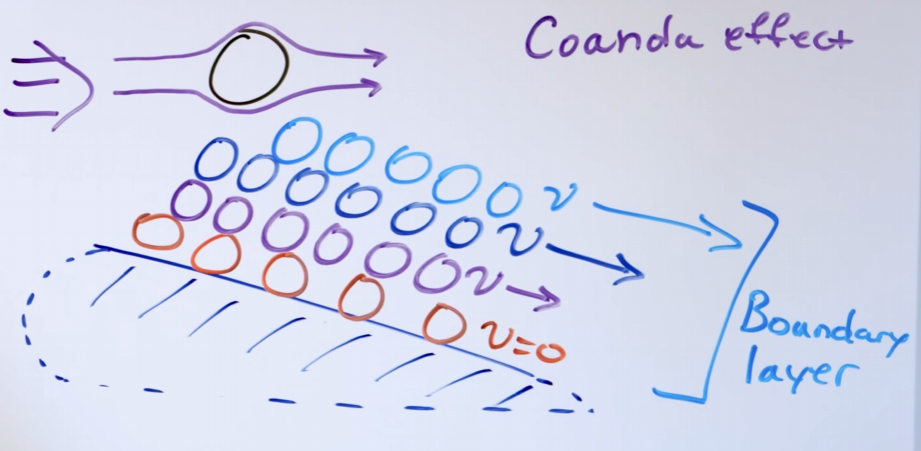
Coanda effect states any fluids will sticks close to the shape of the wing and due to the curve and AOA, will change the air's momentum which creates force downward. Due to Newton 3rd law, there must be an opposite force needed, therefore lift is generated. The video explains this into further detail as it is very detailed and complicated.
You should also read:
Requirements to Become An Aircraft Dispatcher
An aircraft dispatcher is a licensed aviation professional who works from the ground and shares equal authority with the captain in planning and authorizing flights. Their role focuses on ensuring safety and operational efficiency, which includes preparing flight plans, calculating fuel requirements, and monitoring weather…
Continue reading...